

Last Updated on August 23, 2026 by John Patterson
Descend into the deep.
You lock into a decompression chamber aboard a North Sea dive vessel, or step into coastal waters off the Gulf of Mexico with an electric stinger in hand.
Commercial underwater welding represents one of the highest-paying, most physically rigorous specialty trades on earth.
Let’s look at exact geographical compensation.
Where you dive—from offshore hubs like Morgan City and Aberdeen to coastal ports in Australia and China—determines whether you earn entry-level wages or elite six-figure saturation day rates.
GLOBAL COMMERCIAL DIVER EARNING EQUATION
Inland Base ($45k–$75k) vs. Offshore Coastal ($85k–$160k) vs. Saturation Day-Rates ($1,000–$1,800/day = $250k–$380k+ Total)
Review marine construction and heavy timber fastening standards in our master guide on what size nails for framing .
Working with corrosion-resistant structural fasteners? Reference our framing nail compatibility chart.
Quick Answer: How Much Do Underwater Welders Make Globally?
Short version?
In the United States, commercial underwater welders earn an average of $75,000 to $130,000 annually ($35 to $65/hr), with entry tenders starting at $45,000 to $65,000 and elite offshore saturation divers making $200,000 to $350,000+.
Globally, North Sea divers in the UK earn £70,000 to £160,000+, Canadian subsea welders earn CAD $85,000 to $220,000+, Australian offshore welders command AUD $130,000 to $320,000+, and commercial divers in China earn $50,000 to $150,000 USD equivalent on international oil and gas projects.
United States Average: US Gulf Coast & inland divers average $75,000 to $130,000; saturation divers exceed $300,000 annually.
United Kingdom (UK): North Sea offshore saturation divers in Aberdeen earn £1,000 to £1,500 daily during active campaigns.
Canada: Atlantic offshore (Newfoundland) and BC coastal divers average CAD $85,000 to $220,000.
Australia: North West Shelf (Perth/Karratha) offshore saturation divers earn AUD $1,400 to $2,200 daily.
China & Asia-Pacific: Bohai Bay and South China Sea commercial offshore welders earn $50,000 to $150,000 USD.
US Salary Breakdown by Major Coastal & Inland Cities
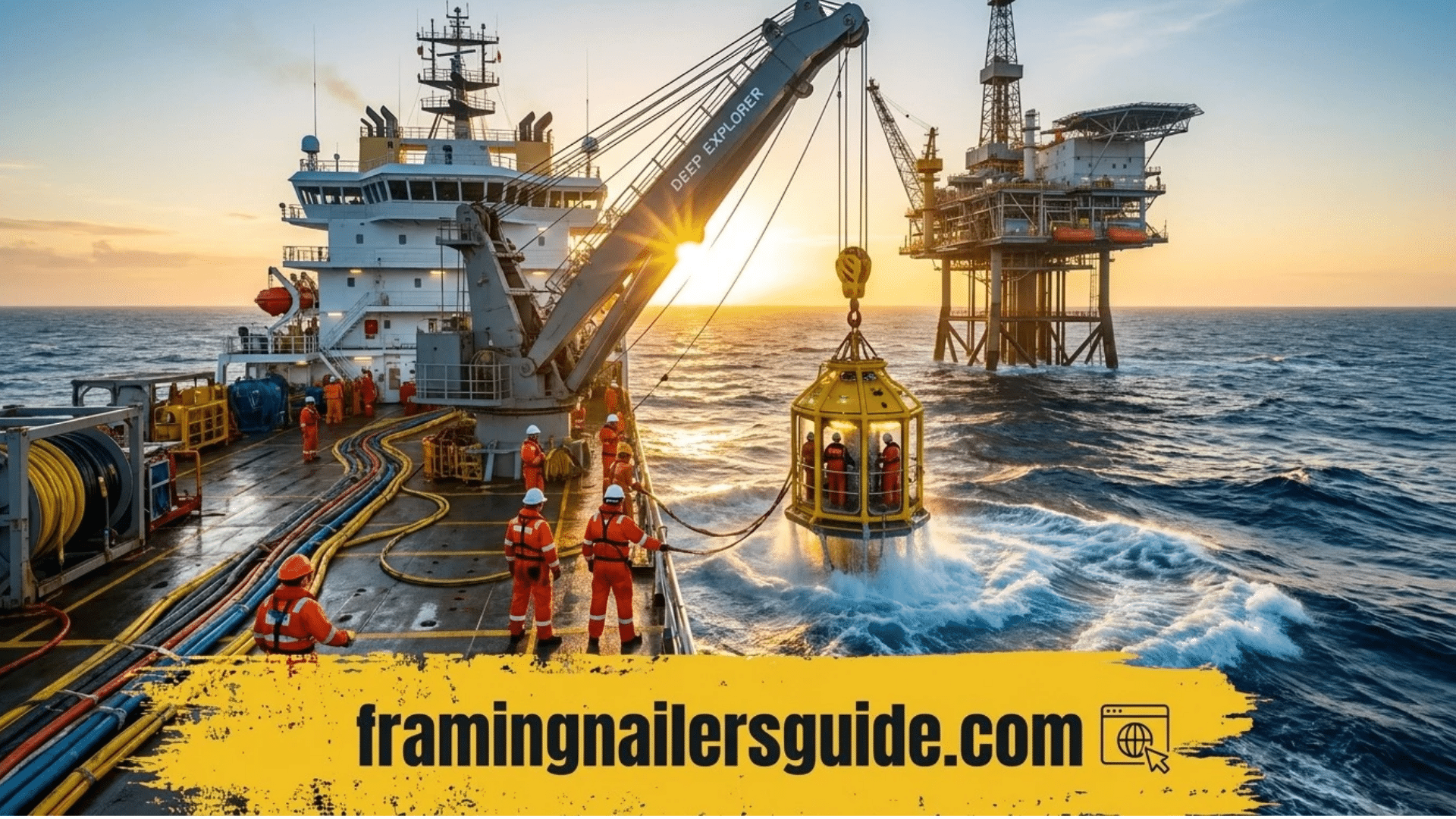
Geography determines your daily rate.
Commercial diving in the United States is split between offshore energy hubs along the Gulf Coast and municipal/infrastructure work across coastal and inland waterways.
1. Gulf Coast Hubs (Louisiana & Texas)
Morgan City & Houma, LA: Average annual pay: $95,000 – $180,000+ (Saturation divers: $250,000–$350,000+). The capital of US offshore commercial diving, housing major subsea contractors supporting oil rigs, pipelines, and deep Gulf exploration.
Houston & Galveston, TX: Average annual pay: $90,000 – $165,000. Corporate headquarters for subsea engineering firms, port ship-channel maintenance, and harbor hull welding.
New Orleans, LA: Average annual pay: $85,000 – $155,000. Focuses on river shipping channels, Mississippi River barge salvage, and coastal levee floodgate infrastructure.
2. West Coast & Alaska Hubs
Seattle & Tacoma, WA: Average annual pay: $85,000 – $145,000. Commercial diving across Puget Sound for naval shipyard repairs, bridge piers, and ferry terminal maintenance.
Long Beach & San Pedro, CA: Average annual pay: $90,000 – $150,000. High-cost-of-living metro focus on container ship husbandry, port pile restoration, and underwater pipeline outfalls.
Anchorage & Kenai, AK: Average annual pay: $110,000 – $210,000. High cold-water hazard pay for Cook Inlet oil platforms, subsea telecom cables, and sub-zero salvage.
3. East Coast & Great Lakes Inland Hubs
Norfolk & Virginia Beach, VA: Average annual pay: $80,000 – $140,000. Subsea maintenance for naval military drydocks, harbor dredging, and offshore wind turbine farm foundations.
Duluth, MN & Chicago, IL: Average annual pay: $65,000 – $115,000. Freshwater inland diving covering hydroelectric dams, intake screens, municipal water towers, and canal locks.
Review national wage data from the U.S. Bureau of Labor Statistics (BLS Commercial Divers).
International Pay Scales: UK, Canada, Australia & China
Commercial diving is a global passport trade.
International diver-welders move across offshore jurisdictions depending on seasonal oil, gas, and offshore wind turbine installation campaigns.
1. United Kingdom (UK) & The North Sea
The North Sea is world-renowned for harsh weather and high safety standards under the UK Health and Safety Executive (HSE).
Aberdeen, Scotland (Energy Capital): Average annual pay: £70,000 to £110,000 for standard air diving. Offshore saturation divers operating out of Aberdeen earn daily rates between £1,100 and £1,600, yielding £140,000 to £220,000+ per active season.
Great Yarmouth & Lowestoft: Average annual pay: £55,000 to £95,000 focusing on southern North Sea gas platforms and offshore wind turbine monopile welding.
Reference UK commercial diving safety mandates under the UK Health and Safety Executive (HSE Diving Regulations).
2. Canada (Atlantic Offshore & Pacific Coast)
Canadian diver-welders manage sub-zero water temperatures and heavy tidal currents.
John’s, NL & Halifax, NS: Average annual pay: CAD $110,000 – $240,000. High-hazard offshore oil production (Hibernia, Hebron) and Grand Banks subsea installations.
Vancouver & Victoria, BC: Average annual pay: CAD $80,000 – $140,000. Marine timber piling, port infrastructure, hydroelectric dams, and pulp mill underwater outfalls.
Review Canadian subsea standards via the Canadian Association of Petroleum Producers (CAPP Offshore Guidelines).
3. Australia & Asia-Pacific (North West Shelf)
Australia offers some of the highest base daily rates in the commercial diving world.
Perth, Dampier & Karratha, WA: Average annual pay: AUD $150,000 – $320,000+. Deepwater LNG pipeline installations on the North West Shelf command saturation day rates of AUD $1,500 to $2,400 per day.
Sydney, Melbourne & Brisbane: Average annual pay: AUD $95,000 – $165,000. Commercial container harbor development, dry dock vessel maintenance, and offshore Bass Strait gas fields.
Review Australian offshore dive safety under Safe Work Australia Diving Standards.
4. China & East Asia (Bohai Bay & South China Sea)
China’s booming offshore energy sector and deepwater port construction drive high subsea construction volume.
Shanghai, Tianjin & Shenzhen: Average annual pay: $65,000 – $150,000 USD (equivalent to 450,000–1,000,000+ RMB). International contractors working offshore in Bohai Bay and the South China Sea for CNOOC pipeline projects earn top-tier expat day rates ($800–$1,400 USD/day).
Domestic Inland Divers: Average annual pay: $40,000 – $75,000 USD for regional domestic inland bridge, Yangtze River dam, and municipal harbor maintenance.
Experience Tiers & Saturation Dive Pay Rates
Career progression is earned in the dive log.
Every commercial diver begins topside before earning the right to dive deep-sea structural projects.
Tier 1: Diver Tender / Apprentice (Years 0–2): Average annual pay: $45,000 – $65,000 ($22–$32/hr). Tending dive hoses, mixing gas manifolds, managing topside welding generators, and logging shallow air dives.
Tier 2: Full Commercial Diver-Welder (Years 3–5): Average annual pay: $75,000 – $120,000 ($38–$60/hr). Certified surface-supplied diver conducting wet welding, cutting, and hull inspections up to 100 feet.
Tier 3: Senior Offshore Specialist (Years 6–10): Average annual pay: $120,000 – $180,000 ($60–$90/hr). Offshore oilfield repairs, deep air/mixed gas diving, underwater non-destructive testing (NDT), and hyperbaric wet welding.
Tier 4: Saturation Diver-Welder (Elite): Average annual pay: $220,000 – $380,000+ ($1,000–$1,800/day). The absolute pinnacle of commercial diving. Living in pressurized hyperbaric habitat living chambers for up to 28 consecutive days to execute deep-sea welds at 300 to 1,000+ feet.
Depth Pay, Hazard Bonuses & Overtime Payroll Formulas
Depth turns into direct revenue.
Commercial diving union agreements (such as the Carpenters/Pile Drivers union in the US or IMCA agreements internationally) structure pay with layered hazard allowances.
Depth Pay Bonus ($/Foot): Earn an extra $1.00 to $4.00 per foot of dive depth past 50 feet. A 200-foot dive adds $150 to $600 per dive shift on top of hourly base pay.
Chamber / Saturation Day-Rate: Saturation divers earn a guaranteed daily rate ($800–$1,600/day) around the clock simply for living under hyperbaric pressure in the habitat module.
Overtime Multipliers: Offshore contracts operate 12-hour shifts for 14 to 28 consecutive days. Hours over 40 per week bill at 1.5x to 2.0x base rates, generating $15,000 to $30,000 in overtime per hitch.
OFFSHORE EARNINGS FORMULA
Gross Hitch Pay = (Base Hours × Rate) + (Overtime × 1.5) + (Depth Bonus Footage) + (24-Hr Saturation Allowance)
Wet Welding vs. Dry Hyperbaric Welding Standards (AWS D3.6M)
The method dictates the paycheck.
Underwater welding is divided into two distinct technical procedures governing structural code approval:
1. Wet Shielded Metal Arc Welding (SMAW / MMA)
The diver is submerged directly in water, using waterproof flux-coated electrodes (such as Broco Sof-Stik or Hydroweld FS). Quenching by surrounding water hardens the weld rapidly, restricting wet welds to temporary repairs or AWS D3.6M Class B standards.
Wet Welding Applications: Ideal for emergency harbor repairs, temporary ship patches, and sacrificial anode installation.
2. Dry Hyperbaric Habitat Welding
A custom steel chamber (habitat) is sealed around the subsea pipeline or joint and blown dry with breathable gas mixtures. The diver enters the dry chamber and welds under preheated, dry conditions to achieve full AWS D3.6M Class A structural code compliance.
Dry Hyperbaric Applications: Commands the highest pay rates in the industry due to strict radiographic X-ray inspection standards on deep-sea gas pipelines.
All structural subsea welding procedures must comply with the American Welding Society (AWS D3.6M Specification for Underwater Welding).
Offshore Jobsite Facilities, Living Quarters & Rotation Perks
Offshore deployments cover all living expenses.
While the work is physically demanding, commercial diving contractors provide all-inclusive accommodations during active offshore hitches:
Rotation Schedules: Offshore crews typically work 14 days on / 14 days off, 28 days on / 28 days off, or seasonal 3-month summer campaign rotations.
Vessel Facilities & Room/Board: Diver-welders living on Dive Support Vessels (DSVs) receive private or semi-private berthing, commercial galley catering (4 hot meals daily), gym facilities, and high-speed satellite internet.
Medical & Insurance Coverage: Comprehensive commercial diving healthcare covering decompression sickness (DCS) hyperbaric treatments, emergency subsea medevac evacuation insurance, and specialized high-risk life insurance policies.
Gear Allowances: Many commercial diving employers provide $1,500 to $3,000 annual stipends for personal dive computers, commercial drysuits, and helmet maintenance.
Review mandatory safety and decompression chamber protocols under OSHA Commercial Diving Operations (29 CFR Part 1910 Subpart T) and the International Marine Contractors Association (IMCA Diving Division).

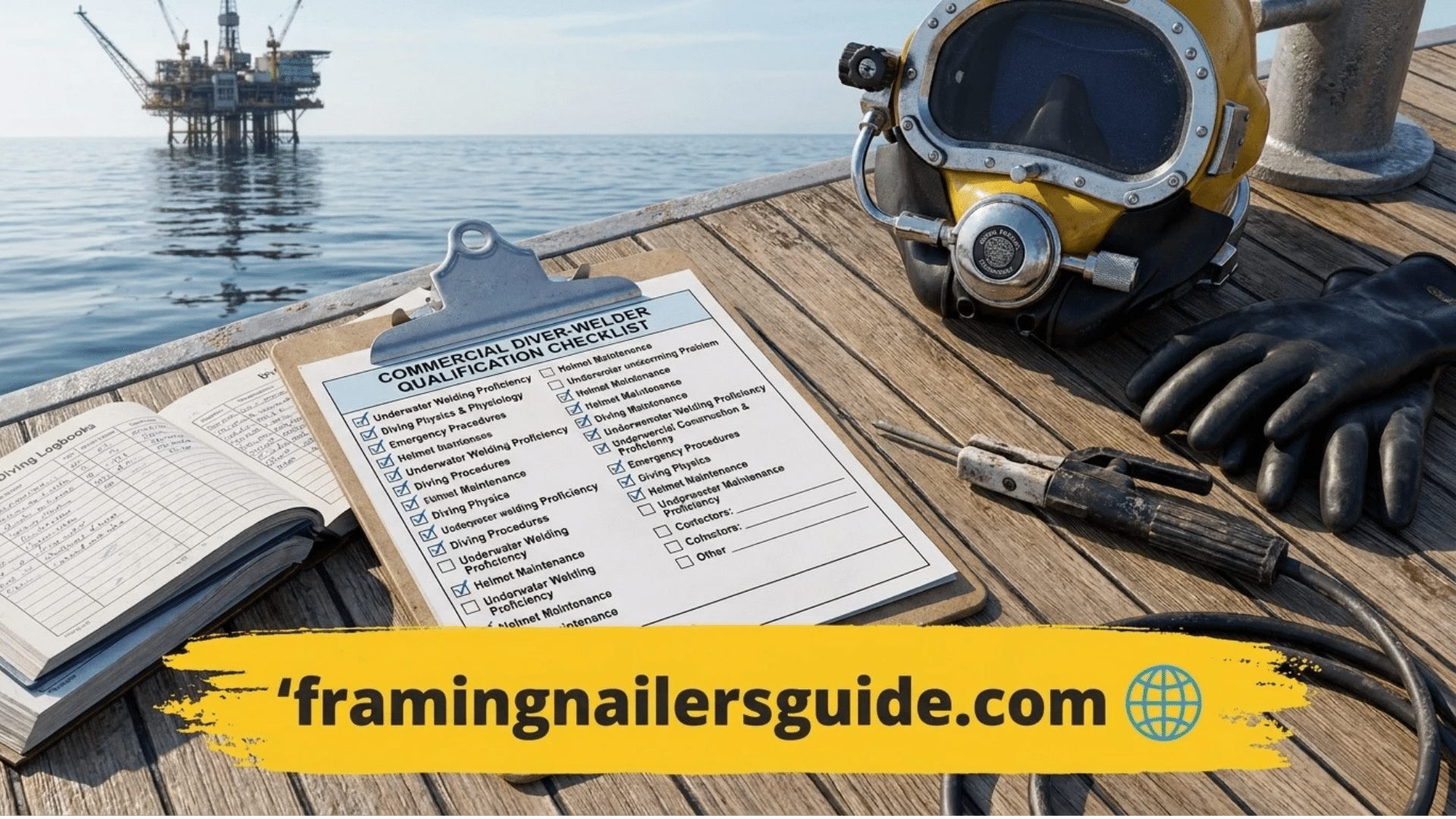
Commercial Diver-Welder Career & Certification Checklist
Run this check before applying to commercial diving academies or taking subsea contracts:
Commercial Diving Diploma: Did you complete an accredited ACDE commercial diving program (minimum 600 hours)?
ADCI Certification: Do you hold an active ADCI (Association of Diving Contractors International) Commercial Diver Certification card?
AWS Welding Credential: Have you earned AWS D3.6M underwater welding qualification (or AWS D1.1 structural topside certification)?
Diving Medical Clearance: Have you passed an annual commercial diving hyperbaric medical physical (including lung capacity & bone scans)?
Emergency Response Cards: Do you hold active First Aid, CPR, and Emergency Oxygen Administration credentials?
Offshore Security Clearance: Do you possess a valid TWIC (Transportation Worker Identification Credential) and offshore BOSIET safety card?
Explore accredited commercial diving programs through the Association of Diving Contractors International (ADCI).
Frequently Asked Questions
What is the starting salary for an underwater welder?
Entry-level underwater welders typically begin as commercial dive tenders earning $40,000 to $65,000 annually ($20 to $32 per hour) while logging dive hours and assisting senior divers.
Which city pays the highest underwater welder salary in the US?
Morgan City and Houma, Louisiana, along with Houston, Texas, pay the highest total compensation due to the concentration of offshore oil, gas, and saturation diving operations in the Gulf of Mexico.
How much do underwater welders make in the UK North Sea?
Offshore saturation divers working out of Aberdeen, Scotland, earn between £1,000 and £1,600 per day, allowing top commercial divers to make £140,000 to £220,000+ per year.
Why do saturation divers make over $300,000 a year?
Saturation divers work at extreme depths (up to 1,000+ feet) under intense hyperbaric pressure for weeks at a time. The high compensation reflects the severe physical strain, decompression risks, and specialized technical expertise required.
How long does it take to become an underwater welder?
Becoming certified takes approximately 6 to 12 months in an accredited commercial diving school, followed by 1 to 2 years working as a dive tender to gain practical subsea welding experience.
Final Summary & Key Takeaways
Underwater welding offers elite earning potential worldwide.
Earn your ADCI and AWS D3.6M certifications, start with inland harbor and bridge contracts, and transition to offshore saturation projects in the Gulf of Mexico, North Sea, or Australia to maximize your income.
Master hyperbaric welding physics, maintain peak medical clearance, and unlock one of the most lucrative technical careers in marine construction.
