
Last Updated on August 23, 2026 by John Patterson
If you want to work smarter, not harder, then you should be using a cant hook or peavey when handling logs.
No doubt about that.
Be it a big log or a little piece of wood, you will not want to be flexing too much and harm your back.
For you, high-quality cant hooks and peavey will perform the work.
But you know that already, and this is exactly why you decided to search the web for the best cant hooks and peaveys eventually found yourself on this page.
Do not worry, you are in the right space.
I realize it can be daunting to choose the heavy-duty cant hooks and peavey from all of the options. But allow me to do the heavy lifting for ya.
So in this piece, I tracked down six cant hooks and Peavey’s reviews to share both the good and bad features of these tools.
Then for what you should be on the lookout for when locating cant hooks or peaveys-
- The length of the handle.
- The grip.
- The bite power; how long it lasts; and how strong the bite onto the log is.
- How much does the tool cost, etc.
I have accounted for those and then some.
Without any further ado, let me start.
Cant Hook and Peaveys Buying Guide for 2026
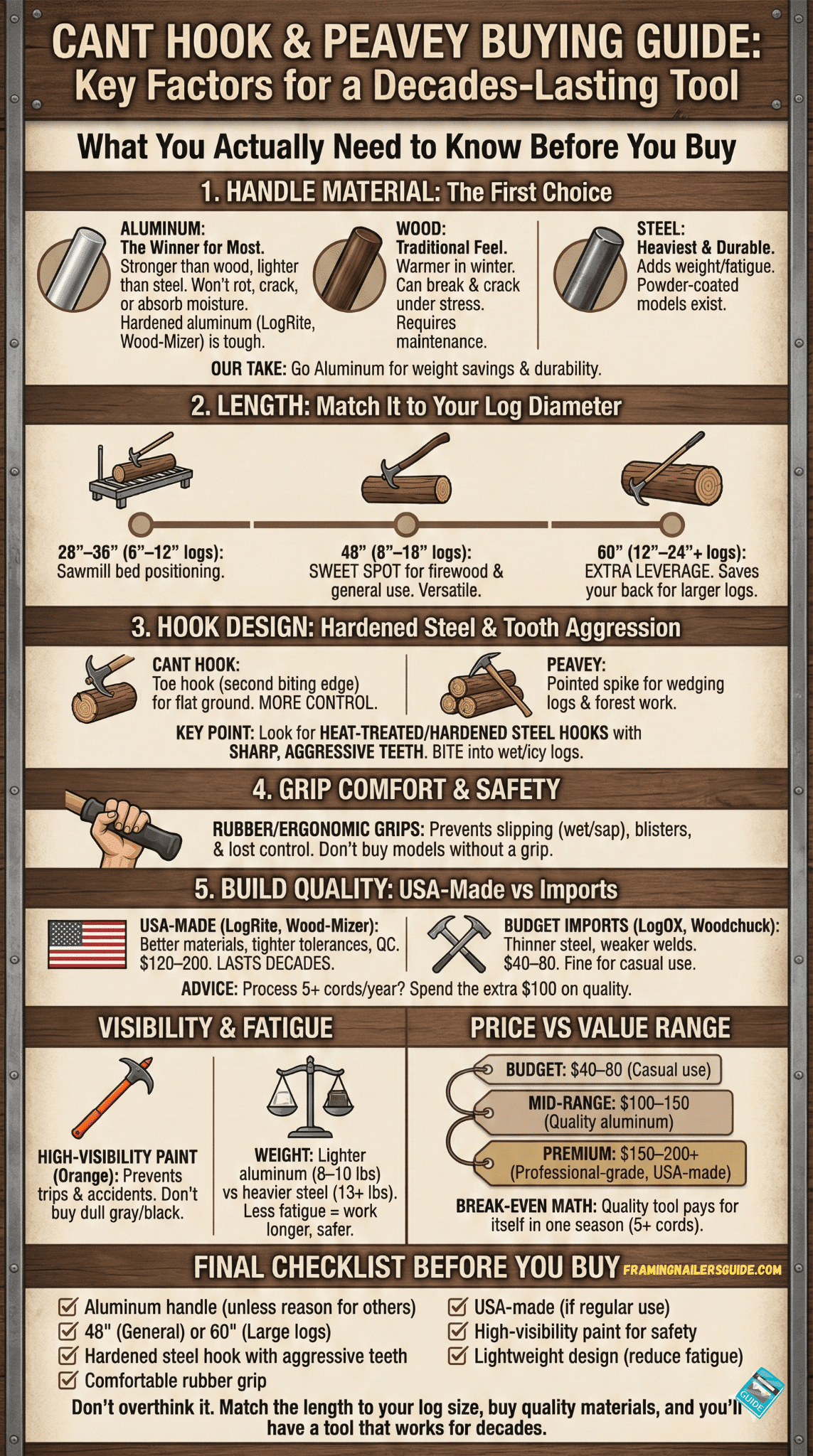
Here’s what you actually need to know before you buy.
I’ve tested enough cant hooks and peaveys over the years to know the difference between tools that work and tools that waste your money.
And honestly? Most people overthink this. But there are a few critical factors that separate a tool you’ll use for decades from one that bends, breaks, or sits in the corner of your shed collecting dust.
Let me break down the key factors that matter in 2026.
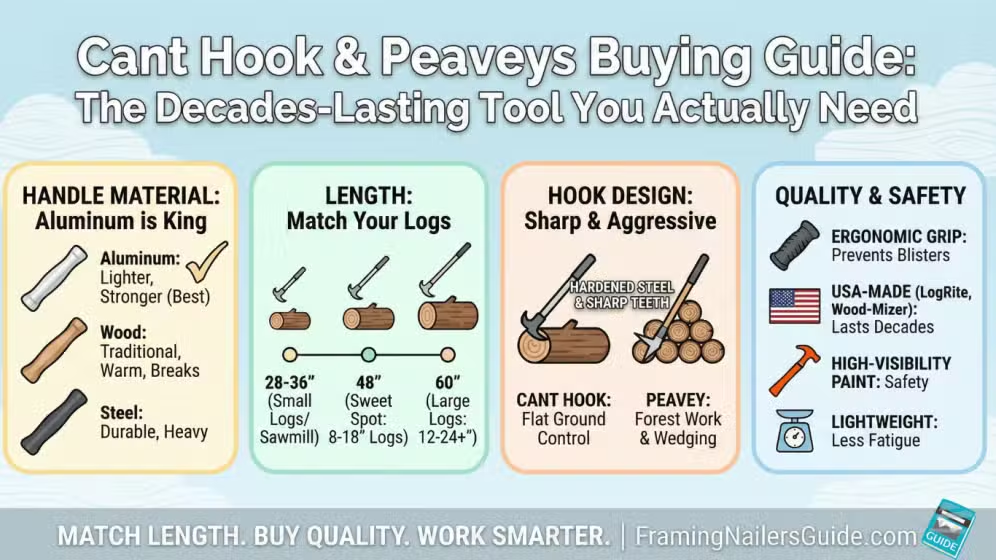
Handle Material: Aluminum vs Wood vs Steel
This is the first thing to nail down.
Aluminum handles are the clear winner for most users. They’re lighter than steel, stronger than wood, and won’t rot, crack, or absorb moisture. Brands like LogRite and Wood-Mizer use hardened aluminum that’s nearly indestructible.
Wood handles feel traditional and stay warmer in winter, which is nice if you’re working in cold climates. But they break. They crack under stress. And they require maintenance.
Steel handles are the heaviest option but incredibly durable. Some budget models use powder-coated steel, which works fine but adds weight you’ll feel after an hour of use.
My take? Go aluminum unless you have a specific reason not to. The weight savings and durability are worth it.
Length: Match It to Your Log Diameter
Don’t just grab whatever’s on sale.
For logs 8–18 inches, a 48-inch cant hook is your sweet spot. It’s the most versatile all-around length and the customer favorite for good reason.
For logs 12–24 inches or larger, go 60 inches. That extra length gives you leverage—and leverage saves your back. One user on Reddit said it perfectly: “The 60” will always do more.”
A 28-36 inch model exists for sawmill bed work where logs are elevated, but it’s too short for ground rolling.
Here’s a quick reference:
| Length | Log Diameter | Best Use |
|---|---|---|
| 60" | 12"–24"+ | Heavy-duty, larger logs |
| 48" | 8"–18" | All-around firewood & general use |
| 28"–36" | 6"–12" | Sawmill bed positioning |
Hook Design: Hardened Steel and Tooth Aggression
The hook is where the tool grips the log. If it’s not sharp, hardened, and aggressive, it’ll slip—and that’s dangerous.
Look for heat-treated or hardened steel hooks with sharp, aggressive teeth. These bite into bark and hold even on wet or icy logs.
Cant hooks have a toe hook (second biting edge) on the end of the handle, which gives you better grip and control on flat ground. Peaveys have a pointed spike for wedging logs apart in rough terrain.
Key point: Two biting edges (cant hook) = more control. One spike (peavey) = better for forest work and separating log piles.
Grip Comfort and Safety
You’ll be holding this thing for hours. Cheap grips mean blisters, slipping, and lost control.
Look for rubber or ergonomic grips that prevent your hands from sliding, especially when logs are wet or covered in sap.
Some budget models skip the grip entirely. Don’t buy those.
Build Quality: USA-Made vs Imports
This matters more than you’d think.
USA-made tools from LogRite, Wood-Mizer, and similar brands use better materials, tighter tolerances, and quality control. They cost $120–200 but last decades.
Budget imports (LogOX, Woodchuck, Felled) run $40–80 but often use thinner steel, weaker welds, and lighter-duty construction. Fine for casual users, but pros report bending and breaking under heavy use.
My advice? If you’re processing more than a few cords per year or running a sawmill, spend the extra $100 on a LogRite or Wood-Mizer. If you’re just trying it out or only move a few logs per season, budget options work.
Visibility and Jobsite Safety
This sounds minor, but it’s not.
Bright orange or high-visibility paint helps you (and others) see the tool on the ground, preventing trips and accidents.
Some models come in dull gray or black. Hard pass. You will lose it in the brush.
Weight: Don’t Underestimate Fatigue
A 48-inch aluminum cant hook weighs around 8–10 pounds. A steel model? 13+ pounds.
That 3–5 pound difference feels like nothing at first. After an hour of rolling logs, it’s everything.
Lighter tools mean less fatigue, which means you work longer, safer, and more efficiently.
Price vs Value: What’s Worth Spending?
Here’s the range in 2026:
- Budget models: $40–80 (LogOX, Woodchuck, Felled)
- Mid-range: $100–150 (quality aluminum, decent brands)
- Premium: $150–200+ (LogRite, Wood-Mizer, professional-grade)
Break-even math: If you process 5+ cords of firewood per year, a quality cant hook pays for itself in one season by eliminating the need for hired help.
Final Checklist Before You Buy
✅ Aluminum handle (unless you have a reason for wood or steel)
✅ 48″ for general use, 60″ for large logs
✅ Hardened steel hook with aggressive teeth
✅ Comfortable rubber grip
✅ USA-made if you’re using it regularly
✅ High-visibility paint for safety
✅ Lightweight design to reduce fatigue
Don’t overthink it. Match the length to your log size, buy quality materials, and you’ll have a tool that works for decades.
| Name | Brand | Weight | Product Dimensions | Item Package Quantity |
|---|---|---|---|---|
| LogRite 60" | LogRite | 9.95 lbs | 59.8 x 8.2 x 2.5 inches | 1 |
| Woodchuck Dual Peavey | Woodchuck Tool | 13 pounds | 10 x 2 x 48 inches | 1 |
| LogOX 3-in-1 Forestry Multitool | LogOX | 12 pounds | 28.74 x 9.598x 5.799 inches | 3 |
| 1944 Earth Worth Peavey Point | Earth Worth | 8.43 pounds | 49 x 18 x 1 inches | 1 |
| Ironton Wooden Handle Cant Hook | Ironton | 11 lbs | 39.37 x 39.37 x 19.69 inches | 1 |
| Wood-Mizer Steel Cant Hook | Wood-Mizer | 10 pounds | 48 x 6 x 2 inches | 1 |
6 Best Cant Hook & Peaveys – Detailed Review
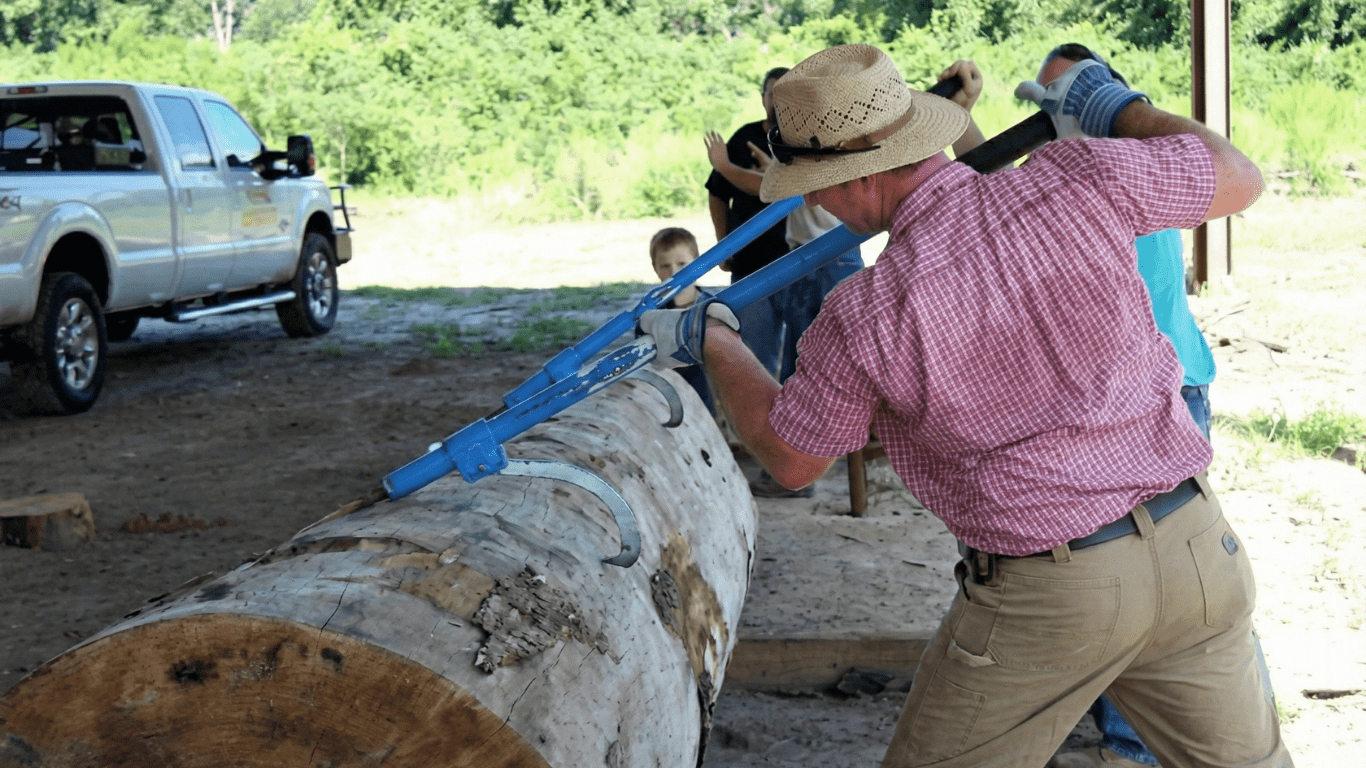
#1. LogRite 60″ Heavy-duty Cant Hook Review
-
- The rubber grips are a little stretched out to provide you with adequate control when handling the hook.
- Its brilliant blue shade makes it truly easy to find.
- This hook is a long one (60″) to adequately support the big guys.
- This will certainly pack a punch.
- Which, as you might expect, gives it something of a low mass.
- The entire construction is pretty robust.
- That, no question, will stick for a while.
- For rolling both small and large logs, this one comes in handy.
- They are precise in their assembly, and the lever is thick enough to make sure that you feel stable and in control.
- It’s well worth the price.
- The price is a little on the higher side. However, like I said before, for the price you get an excellent quality and stable box but worth purchasing at least once.
- After buying the hook and shoe, we should sharpen each of them to be able to obtain more proper results.
Summary
Here is another real back saver for you, this LogRight cant hook is ready to go in your log yard or job site where ever it is that you need to turn and maneuver the logs. And it’s American made, so there should be no question as to the legitimacy of this sucker.
The length of this one is 60″ and the diameter of the handle is 1.75″. This features high-end aluminum for the handle. It can process logs with a diameter of about 28”-30” or even above, you can efficiently work on 25′ as well or higher.
This cant hook is right on the money to please hobbyists, woodworkers and professionals alike.
This cant hook is among the best bangs for your back injury bucks.
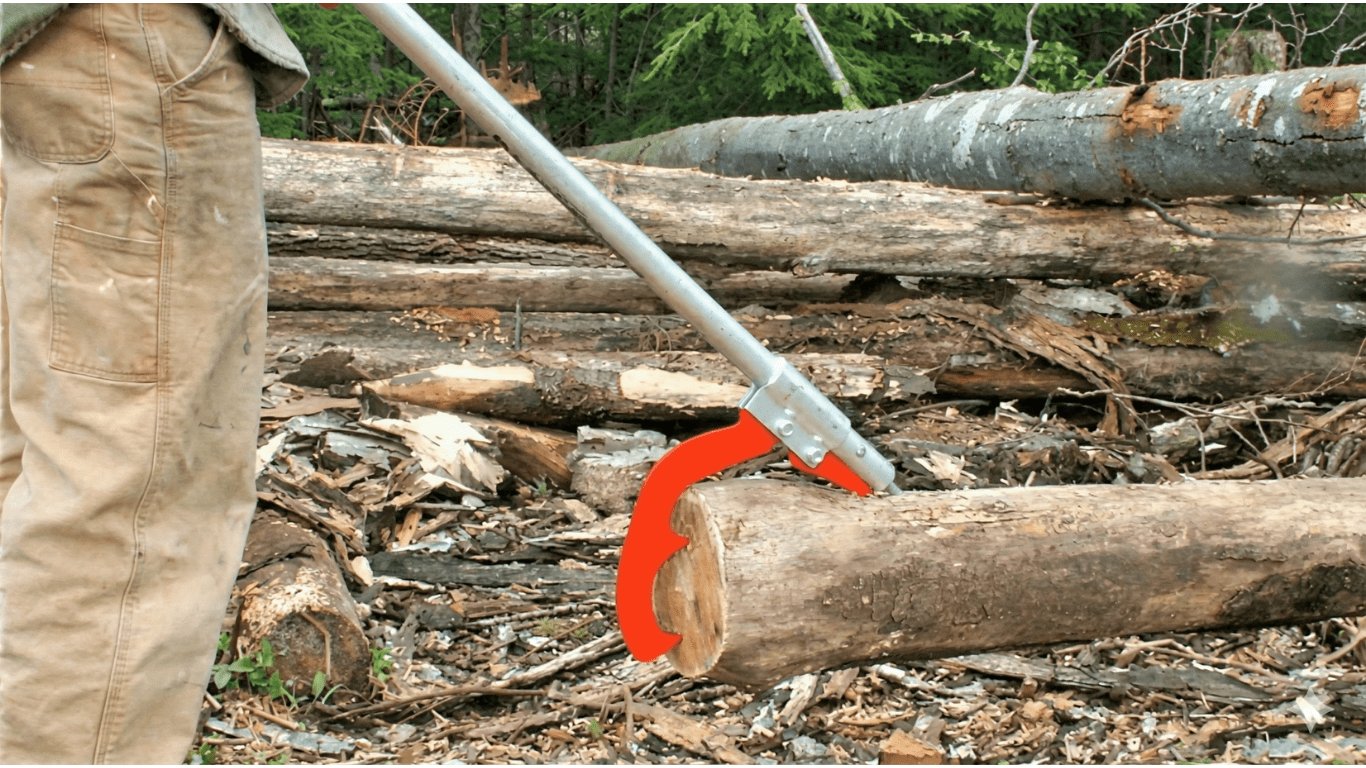
#2. Woodchuck Dual Peavey Point and Cant Hook Review
-
- It also doubles as a peavey and a cant hook.
- This particular tool is not the heaviest of the bunch.
- This tool can handle both small and big logs.
- It is a very strong and durable tool, we can say: it is built like a tank.
- The double teeth of the hook are set to give it a sharp bite.
- Featuring a high-end aluminum and powder-coated steel lever.
- With one of the other ends staked into the ground, this retractable peavey point frees frozen logs.
- You can easily get it at a low cost.
- Easy to use
- The only downside is that the grip could have been bigger.
- If this tool had just been slightly longer, it would have come up much more handy as a taller person. But, you still will be able to leverage enough if you are around 6′ 1,”
Summary
It is a Double Peavey Point and Cant Hook This is a heavy-duty tool. So at least when you are moving the logs, you have enough control.
On the quality, I tell you that it is a good tool made in America.
There are again options with a jack and to choose either one of them without getting pinched in your pockets.
This cant hook & peavey has a handle length of roughly 47”.
This tool allows you to quickly turn and shift a 30″ round or larger 20′ long log without breaking a sweat.
For back-saving, though, this is surely an all-purpose tool to have—and probably a very long-lasting one too.
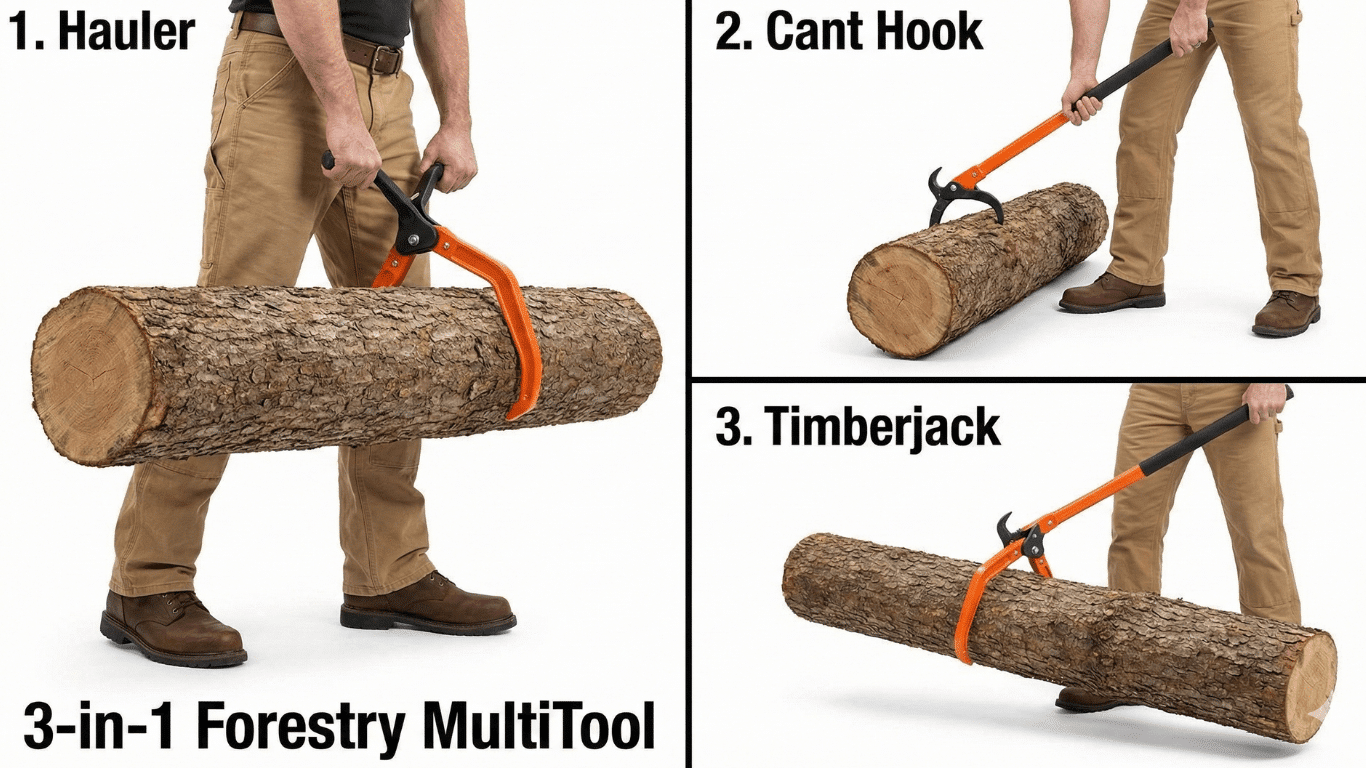
#3. LogOX 3-in-1 Forestry Multitool Review
-
- It means you are taking three woodworking helping tools at a very cheap cost.
- Simple, providing plenty of distance and versatility.
- This is an excellent set of tools for handling smaller logs. Now, by no means is it not a decent suit for bigger logs too.
- The simplest task this multitool does is raise the cutting edge of the log.
- Perfect for tall and short folks alike.
- The tools (especially the timber jack) are extremely easy to assemble too.
- Its durable and rugged form factor.
- Ideal design, allowing you to work without fall off.
- This makes it very portable so it’s easy to take the tools with you.
- Good quality means this will last a long time.
- The company is 100% behind its customers.
- The length of the cant hook handle seemed short and would have benefited tall people by being longer.
- The handle could have been a little bit longer.
Summary
LogOX 3 — This multi-use LogOX 3-in-1 tool set was designed to help you turn and move both small and large logs effortlessly. It is made in the USA too.
There is a kit where you can build a log hauler, cant hooks, and timber jack. That means you are paying roughly a third of the cost of buying three separate tools.
Cant hook and timber jack — 38 in. Log hauler — 21 in.
App big can handle logs up to 20′ long X 36″ dia or more.
And this LogoX 3-in-1 is a great forestry multitool and dirt cheap for what you get.
Whether you are young or old, this is the perfect tool to effortlessly load your log trailer. Also, If you want to work a man army on the woodworking, so go for it.
#4. Earth Worth 1944 Peavey Review

-
- It does its job quite well.
- It’s a lightweight peavey. So you would not have any problem in keep carrying it around or on using.
- There’s a two-pack, three-pack and four-pack.
- It’s satisfactorily sturdy.
- Peavey point will get the job done when it comes to frozen logs. Also, it penetrates the ground better than most.
- Perfect for haul round logs of big size.
- The parts are well-fitted.
- In colder weather, the handle continues to be warm.
- It’s super inexpensive.
- No rubber grip. It’s a handle that’s completely made of wood. So it can slip if you sweat too much with your hands.
- The handle length is pretty decent but if it was like 60″ then it would have been better for the bigger guys.
- Doesn’t do the small logs too well.
Summary
This peavey has a retractable 18″ opening that aids in freeing the frozen locks. Handle Length: 49″ The handle is long(49 inches).
Owing to the big size of this splitter, it manages logs which are 2′ approximately in size while the business mentions it is 18.
You will have a good grip if you do not sweat too much (especially your hands).
Take this wooden handle peavey only if you are looking for the best budget options. Otherwise, you have some more decent options above my list.
However, this one works better than it looks.
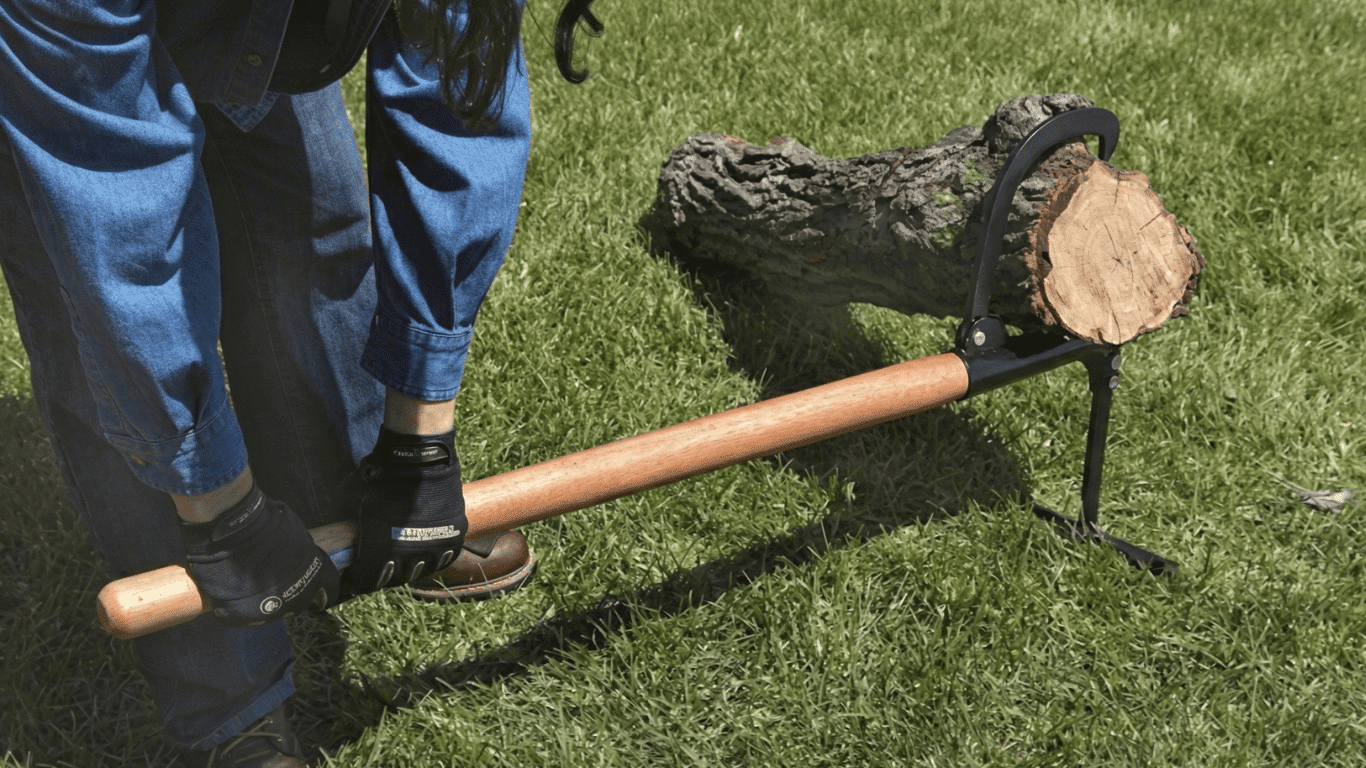
#5. Ironton Wooden Handle Cant Hook Review
-
- This high-performance tool gets the job done and then some.
- Here’s a good implement for rolling large logs.
- The parts are well-fitted.
- Thick, robust handle, sharp hook for appropriate support.
- Fairly light weight, so, easy to carry.
- The size is just right so you can place it wherever you like.
- It is an extremely inexpensive tool compared to the other cant hooks I listed.
- No rubber grip. Free US shipping on orders over $99—just select the free shipping option at checkout. Thus, if your hands are prone to sweating then it can slip.
- For bigger dudes, a longer handle would be beneficial again.
- Not the best for small logs.
Summary
The 48″ you see here will support turning and moving large logs (up to about 24″ diameter, practically) with this Ironton wooden handle cant hook.
It was a peavey, and this one is a wooden cant tool. The same suggestions for both are good to go.
Only get this if you can’t afford the other quality hook I listed, or if you are just really die-hard wooden handles.
And the other thing I need to mention is this cant hook is Chinese-made. So if Chinese stuff is just not your jam, do yourself a favor and skip this one and buy the Logrite 60″ cant hook instead or any of these other USA manufacturers I found listed here.
#6. Wood-Mizer Steel Cant Hook Review

-
- High quality, made in America
- User-friendly handle
- Lightweight, only 10 Pounds
- Ergonomically Designed
- Multiple lengths for many different uses
- Durable & Long Lasting
- Comfortable Rubber Grip
- Low-quality paint
Summary
Have you struggled with the logistics of carrying logs?
We know you were searching for a tool that helps you settle down your life. Fortunately, we have the perfect answer for you! This beefy cant hook is constructed from hardened steel with an additional set of teeth so it can sink its teeth into just about any log and hold on.
Another bonus is the rubber grip making it comfortable and you will not develop blisters and calluses from carrying heavy logs all day.
And so it is that you deserve to be able to work without constantly worrying about how much weight is in each hand, and this is why Wood-Mizer steel cant hooks are made to be. They are heavy-duty but still light enough to hold even the biggest logs – of any size!
And the best part is, these hooks are priced to fit into any budget. So, what are you waiting for? Get your copy today and experience how much easier your job becomes!
Do you know what a pain in the ass is? Logging.
However, you know what is not a pain in the ass? Steel Cant Hook from Wood-Mizer!
It’s also got teeth on the end of its handle to grip the ends of your logs and a bright orange paint job, so you can at least see where you’re sending your logs. And this thing is manufactured somewhere in America.
Pick yourself up one of these steel cant hooks today to make logging a little less boring! They’re available in three different lengths, and they all have that sweet American quality you know we can’t live without. You will not be disappointed – there, I promise.
Logging is hard work.
But it doesn’t have to be a headache. The rubber grip also helps in holding the hook and the teeth provide additional gripping power. This steel cant hook is easy to use. And they’re built in America!
Once you have tried this Steel Cant Hook, you will never go back to your old wood hook!
Speed Analysis: Cant Hook vs Manual Log Rolling
Let’s talk efficiency.
Without a cant hook, you’re either:
-
Kicking logs with your boot (slow, dangerous, damages the wood, looks ridiculous)
-
Using a crowbar or pry bar (awkward, no real grip, easy to slip and hurt yourself)
-
Muscling it by hand (terrible for your back, exhausting, inefficient)
With a cant hook, you can roll a 300–400 pound log in seconds. One smooth motion.
I’ve timed myself. Moving ten 18-inch oak rounds from my driveway to the splitting area used to take about 20 minutes of grunt work. With a cant hook? Less than 8 minutes. That’s more than 50% faster.
And here’s the thing—you’re not just saving time. You’re saving energy. Which means you can work longer, get more done, and not feel destroyed the next day.
Preventing Back Injuries with Cant Hooks
Let me be straight with you.
Log work is dangerous. Not just “you might get a splinter” dangerous—I mean herniated disc, chronic pain, months-of-recovery dangerous.
The entire point of a cant hook is leverage. You’re using physics to move weight you’d never be able to handle with raw muscle. But you still have to use it correctly.
Safe Cant Hook Technique
Here’s what actually matters:
-
Stance: Feet shoulder-width apart, one foot slightly forward for balance
-
Back position: Keep your spine straight—bend at the knees, not at the waist
-
Power source: Push with your legs, not your lower back. Let the tool do the work
-
Log proximity: Keep the log close to your body as you move it
-
No twisting: Never twist your torso while lifting or rolling—reposition your feet instead
-
Know your limits: If a log feels too heavy even with the cant hook, get help or use mechanical assistance
Cant hooks dramatically reduce injury risk compared to manual log handling. But they’re not magic. Use them wrong and you’ll still hurt yourself.
One more thing: logs larger than 16–18 inches become increasingly difficult (and dangerous) to roll safely, even with a proper-length cant hook. That’s when you consider using two tools—one person on each end—or mechanical assistance.
Cant Hook vs Hiring Labor – Cost Savings Explained

Let’s do some real math here.
Say you process 8–10 cords of firewood per year. If you hire someone to help move and buck those logs, you’re paying $30–50 per hour depending on your area. Even at just 10 hours of help, that’s $300–500 annually.
A quality LogRite or Wood-Mizer cant hook runs between $100–200 depending on length and model.
You break even in one season. Maybe two if you’re only doing a couple cords.
After that? Pure savings. Plus you work on your own schedule instead of coordinating with someone else or waiting for help to show up.
For sawmill operators or anyone doing regular timber work, the payback is even faster.
Long-Term Value Breakdown
| Scenario | Manual Labor Cost (Annual) | Cant Hook Investment | Break-Even Timeline |
|---|---|---|---|
| Active firewood producer (8–10 cords/year) | $300–500 | $150–200 | 1 season |
| Casual firewood user (3–5 cords/year) | $150–250 | $120–150 | 1–2 seasons |
| Small sawmill operator | $500–1,000+ | $150–200 | First month |
Top Cant Hook Brands for 2026
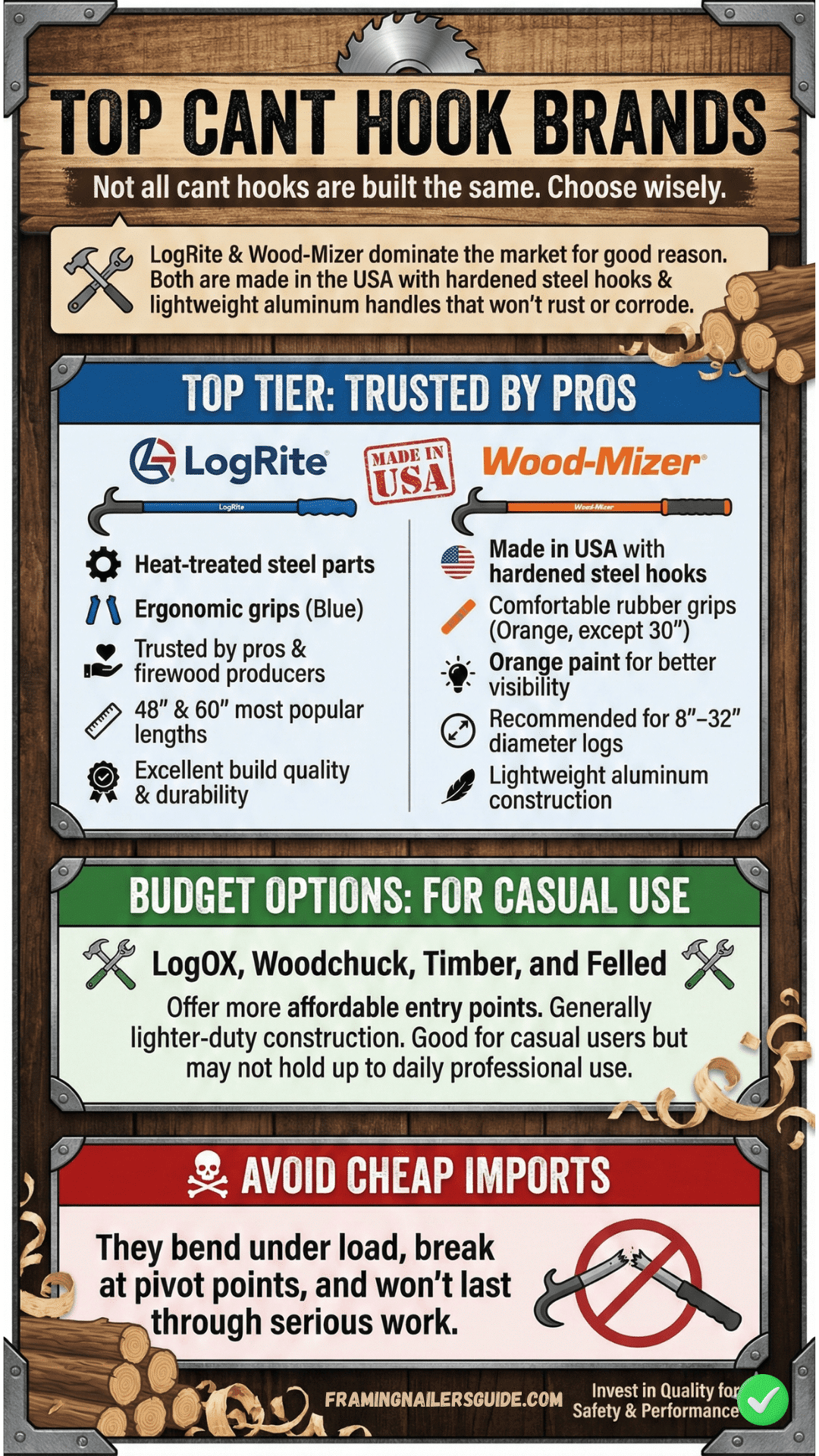
Not all cant hooks are built the same. Some will bend, break, or let you down right when you need them most.
LogRite and Wood-Mizer dominate the market for good reason. Both are made in the USA with hardened steel hooks and lightweight aluminum handles that won’t rust or corrode.
Brand Comparison
LogRite:
-
Heat-treated steel parts
-
Ergonomic grips
-
Trusted by pros and firewood producers
-
48″ and 60″ most popular lengths
-
Excellent build quality and durability
Wood-Mizer:
-
Made in USA with hardened steel hooks
-
Comfortable rubber grips (except 30″ model)
-
Orange paint for better visibility
-
Recommended for 8″–32″ diameter logs
-
Lightweight aluminum construction
Budget Options:
-
LogOX, Woodchuck, Timber, and Felled brands offer more affordable entry points
-
Generally lighter-duty construction
-
Good for casual users but may not hold up to daily professional use
Avoid cheap imports. They bend under load, break at pivot points, and won’t last through serious work.
How to Build a Firewood Rack Using a Cant Hook

Once you’ve got your cant hook and you’re moving logs efficiently, here’s a simple weekend project that makes stacking and storage way easier.
Materials Needed:
-
Four 4×4 posts (8 feet each)
-
2×4 cross braces (six pieces, 8 feet long)
-
3-inch deck screws
-
Post-hole digger or auger
-
Your cant hook
-
Gravel or concrete (optional, for post stability)
Step-by-Step Process:
1. Prepare Your Work Area
Use your cant hook to roll and stage logs in a central area near where you’ll build the rack. This saves trips and keeps your work zone organized.
2. Layout and Dig Post Holes
Mark four post locations: 4 feet apart (front to back), 8 feet wide (side to side). Dig holes 2–3 feet deep.
3. Set Posts
Place 4×4 posts in holes. Use gravel for drainage and concrete for permanent stability. Check that posts are plumb and level.
4. Install Cross Braces
Attach 2×4 braces at the bottom (6 inches up), middle, and top of posts for lateral support. Use 3-inch deck screws.
5. Stack Wood with Your Cant Hook
Now here’s where the cant hook really shines. Instead of bending over constantly to lift and stack split wood, you use the hook to roll, position, and guide each piece into place. Roll rounds to the rack. Position them. Stack them neatly between the posts.
Your back stays straight. The work goes faster. And you’re not exhausted after 20 minutes.
Time Savings Comparison:
| Region | CAGR (2025-2035) | Key Growth Drivers |
|---|---|---|
| China | 6.3% | National reforestation programs, automation investment |
| India | 5.9% | Plantation forestry expansion, compact equipment demand |
| USA | 4.0% | Sustainability certifications, fleet modernization |
| UK | 4.5% | Rewilding initiatives, carbon offset programs |
| Germany | 5.4% | Precision forestry tech, hybrid machinery adoption |
Accuracy and Control: Why Two Biting Edges Matter
This is something a lot of people don’t realize until they’ve used both a cant hook and a peavey side by side.
The toe hook on a cant hook provides a second biting edge, which means the log is gripped at two points instead of one.
What does that give you?
Better control. The log doesn’t slip or roll unpredictably. You can position it exactly where you want it—critical when you’re working around equipment, near a sawmill bed, or stacking wood in tight quarters.
More grip on smooth surfaces. Flat ground, concrete pads, gravel—the toe hook digs in where a single-point peavey spike might skate.
Safer operation. When you have full control over the log, you reduce the chance of it rolling back on you or slipping sideways into your legs.
Project Suitability: When to Choose Each Tool

Here’s how I think about it in practical terms:
Choose a Cant Hook If:
-
You’re working in your yard, around a sawmill, or on flat ground
-
You’re processing firewood and need precision when stacking or positioning rounds
-
You want maximum grip and control
-
You’re moving logs that are already staged or separated
Choose a Peavey If:
-
You’re working in the woods with rough, uneven terrain
-
You need to separate logs from a tangled pile
-
You’re doing river or creek work (traditional peavey territory)
-
You’re guiding logs through tight spaces where the spike helps wedge them apart
Consider Owning Both If:
-
You run a sawmill and also harvest your own logs
-
You process large volumes of timber across different environments
-
You frequently work with logs over 20 inches where two tools (one on each end) provide safer handling
Maintenance and Long-Term Care
Cant hooks are pretty low-maintenance, but here’s what keeps them working for years:
-
Lubricate the pivot point every few months (or more often if you use it daily)
-
Check bolts and fasteners for tightness before each major job
-
Store out of the weather when possible—aluminum won’t rust, but steel parts can corrode
-
Clean bark and debris from the hook after heavy use
-
Inspect the handle for cracks or stress fractures, especially if you’ve dropped it or over-leveraged a log
A well-maintained cant hook will outlast most other tools in your shed. Treat it right, and it’ll still be working decades from now.
Frequently Asked Questions (FAQs)
Can You Use a Cant Hook for Firewood?
Absolutely. This is one of the most common uses.
If you’re processing firewood—bucking rounds, flipping them for splitting, moving them around your property—a cant hook is perfect. The toe hook grabs securely even on flat ground where a peavey’s spike doesn’t offer much advantage.
I use mine constantly. Rolling 24-inch oak rounds that would otherwise take two people (or wreck my back trying solo) becomes a one-person, one-motion job.
The hook bites into the bark, you apply leverage, and the log rolls exactly where you want it. No kicking. No prying with a crowbar. No throwing out your lower back.
What Size Cant Hook Do I Need?
This is where people overthink things.
For logs between 12–24 inches in diameter (which covers most firewood and small timber work), you’re looking at either a 48-inch or 60-inch cant hook.
Here’s my take after using both extensively:
-
48-inch cant hook: Lighter, easier to maneuver, great if you’re smaller-framed or working mostly with logs under 18 inches. This is the most versatile all-around length and the customer favorite for a reason.
-
60-inch cant hook: Gives you significantly more leverage. If you’re dealing with anything over 18–20 inches, or if you have any back issues, that extra length saves your body. One Reddit user put it perfectly: “Leverage man, the 60” will always do more.”
A 30-inch model exists too, but it’s really only useful if you’re working on an elevated sawmill bed where logs are already positioned. Too short for ground work.
My recommendation? Go 60-inch unless you’re working in tight spaces or only handling small logs. Buy once, cry once.
Here’s a sizing chart to simplify it:
| Length | Log Diameter | Best Use |
|---|---|---|
| 60" | 12"–24"+ | Heavy-duty, larger logs |
| 48" | 8"–18" | All-around firewood & general use |
| 28"–36" | 6"–12" | Sawmill bed positioning |
How to use a cant hook?
Response: If you wish to seize the log better or want a bite, in short answer by sharp into the meat, then it is more useful cant hook than a peavey.
Using a cant hook is so easy. For the initial set, you have to place it on the log and press it onto the hitch to bite into the timber firmly.
Then drag the log; that’s it. It’s that simple.
You don’t have to always hook it up in the middle, you can tag at any points that you feel better on the log.
If you need to use it for lifting the log from the ground to cut the log with a saw, just hook it up and flip it over. That way, you will protect the chain from touching the ground—[Note: in this case, you need a log stand attachment with cant hook].
What is the difference between a Peavey and a Cant hook?
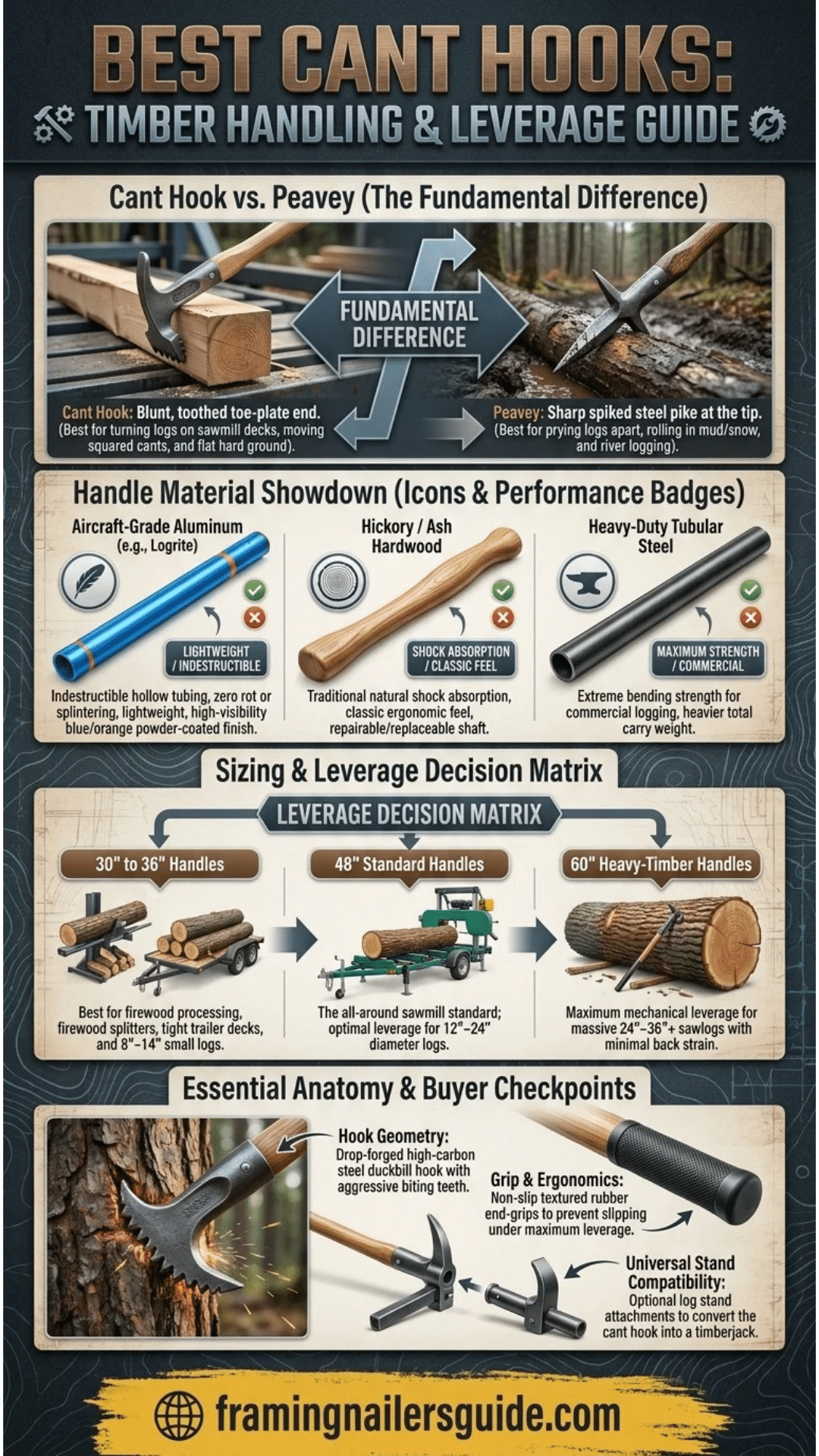
What is the difference between a peavey and cant hook? Answer: A peavey and cant hook look almost exactly the same, having a little variation in construction. That difference also, of course, creates a distinction in use. That small difference aside, you can use them interchangeably.
Let me explain.
Both are operated with a lever or handle and have a hook. Well, the difference is on the end of the handle.
The peavey is essentially a log-hauler with Ð in this example Ð a pointed end on the handle for testing that the log is sound, splitting the wood, stabbing it into the ground, etc. For larger logs, the woodworkers prefer a peavey.
With a peavey, you can split the most snow-covered log.
Cant hooks, meanwhile, have the smallest hook on the handle. Using two hooks gets you a better hold with the cant hook.
Usually, you will want to use a cant hook on a small or medium log. There are no complicated rules here either, but you could roll and move big logs with a cant hook too.
What is a cant hook used for?
What is a cant hook (used in sawmills and other hobbyist woodworkers)?
A cant hook is designed to roll and turn a log without bending. This prevents injury to your back and saves you time as well.
You choose a cant hook over a peavey when getting the most bite you can is more important than anything else.
Final Words
If you’re serious about firewood, timber work, or small-scale milling, a quality 48″ or 60″ cant hook is one of the smartest $120–200 investments you’ll make.
Your back will thank you. Your efficiency goes up. And you stop relying on others to move heavy logs around your property.
Get a good one. Learn to use it right. And never go back to kicking logs around your yard like an amateur.
